
In the early 90s, I bought my first laptop for college: a slightly used PowerBook 165 that I got for a steal. I loved that machine. It served me well for almost five years, surviving RAM and hard drive upgrades without ever letting me down. Still, though, it wasn’t a PowerBook 170 - that was unobtanium. (Same basic machine as the 165, but with that 1-bit active matrix screen that made the 170 so desirable in its day.
A couple years ago, I decided it was time to restore the 165 to its original glory, but the screen was dead. Thanks to a donor PowerBook 180 I found on eBay—dead screen, blown motherboard, but just the right parts cosmetically pristine, and a couple other parts from a donor 170 that was pretty much dead except for the screen and mobo, this machine now looks better than the day I bought the 165… but now it’s the 170 I wanted! Even the little back door that covers the ports is intact, which is surprisingly hard to find. Despite being a total Frankenbuild, the thing really is a mint, no-compromises PowerBook 170, even if it took 3 machines to get there. And the CPU, modem, lower chassis, RAM, and floppy drive are from my original 165, the mainboard and screen are from the donor 170, and a bunch of plastic parts from the donor 180.
Next up I need to get these pictures over to retro.jrj.org


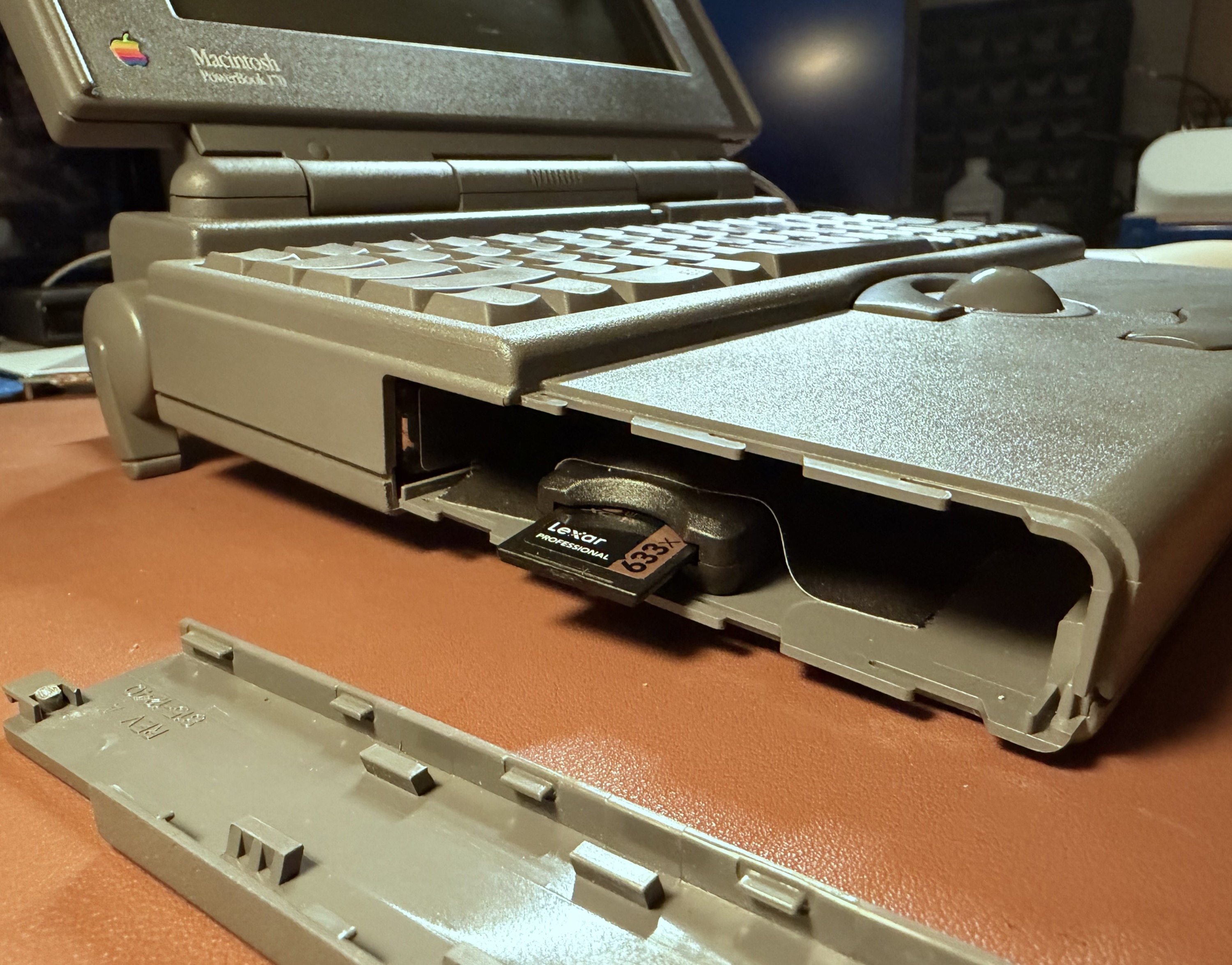
Restoring a 30-year-old hard drive is a bit beyond my pay grade, so I dropped in a Raspberry Pi Zero and BlueSCSI to emulate one instead. It fits neatly where the old hard drive was, but I ran a ribon cable to an SD card reader in the battery bay, which perfectly preserves the stock look while remaining accessible. (Yes, that’s gaffer’s tape. I haven’t gotten around to 3D printing a proper bracket yet.)
Having this machine running again has brought me so much joy. I’ve played some old games and even installed Ssheven, an SSH client for 68030 Macs. I wish I’d taken pictures throughout the restoration process, but this was a weekend relaxation project during my working years—documentation wasn’t the priority.

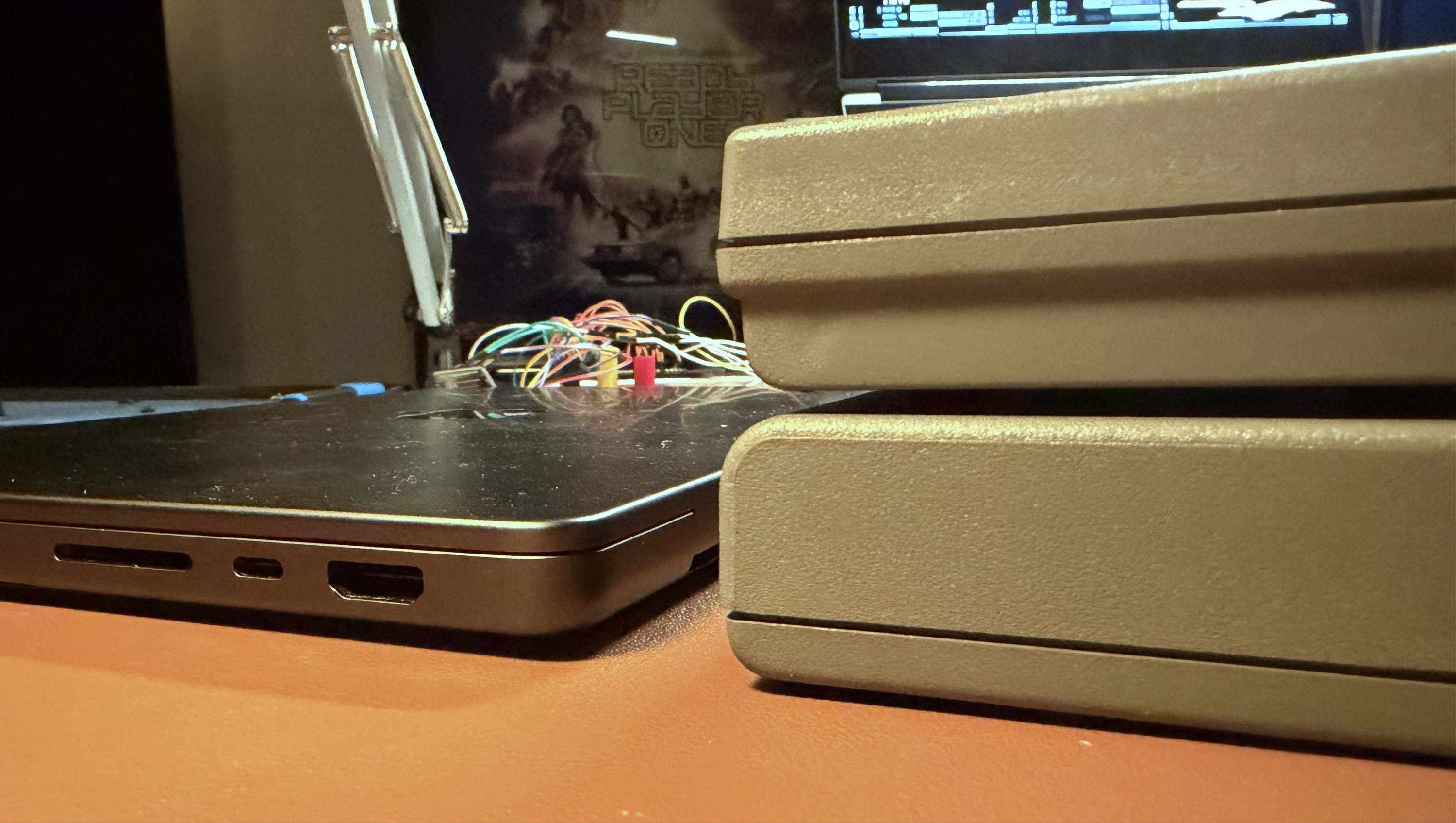
Laptops have gotten thinner, faster, and screens are incomparably better—but Apple had the fundamental form factor figured out almost thirty-five years ago.